News
AI2PI Blog
Latest News from the Project
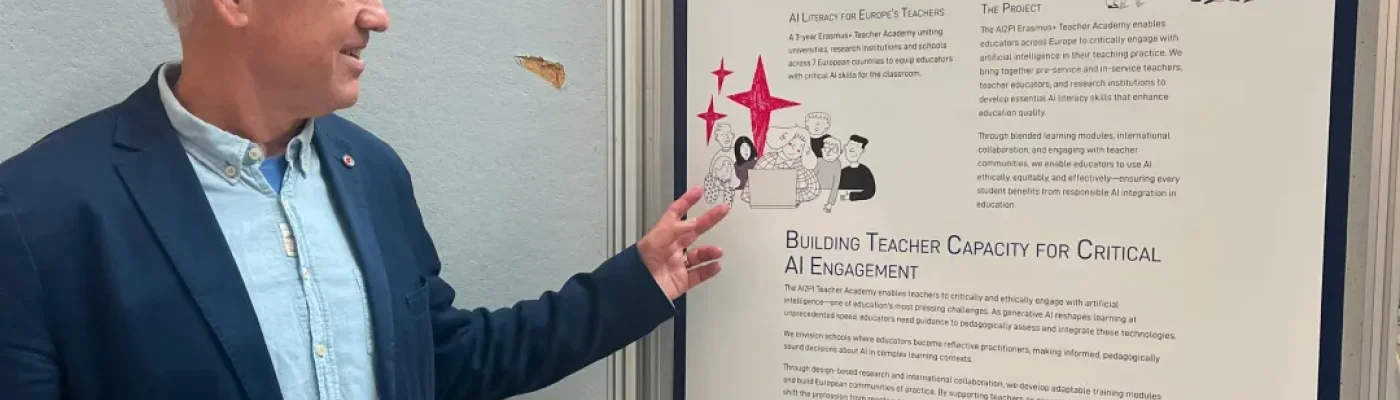
TURKU, September 2026 — The AI2PI – From Artificial Intelligence to Pedagogical Innovation project was represented at the EDutu Forum 2026, held on 29 September at the University of Turku, Finland.

TURKU, August 2026 — From 12th to 14th August 2026, the European consortium of the Erasmus+ Teacher Academy Project AI2PI – From Artificial Intelligence to Pedagogical Innovation met at the University of Turku, Finland, for its Summer Meeting. Bringing together partners from across the consortium, the three-day meeting provided an opportunity to review progress, deepen collaboration across work packages, and jointly shape the next phase of the AI2PI Teacher Academy.

Berlin, 25 June 2026 — Competency frameworks for the use of AI in schools reduce pedagogical action to measurable skills, thereby overlooking central dimensions of professional responsibility. This is the key finding of an analysis of international AI literacy frameworks conducted by the research team of the AI2PI Teacher Academy at Humboldt University of Berlin.

BRAGA, June 24, 2026 — The University of Minho recently welcomed AI2PI's Co-Principal Investigator, Dr. Michael Schlauch for an in-person working visit within the AI2PI – Teacher Academy project.

BRAGA, June 1, 2026 — As artificial intelligence continues to reshape educational practices across Europe, the AI2PI Teacher Academy is taking an important next step: building collaborative digital spaces where teachers, teacher educators and researchers can exchange experiences, discuss challenges and collectively develop critical AI literacy practices for education.
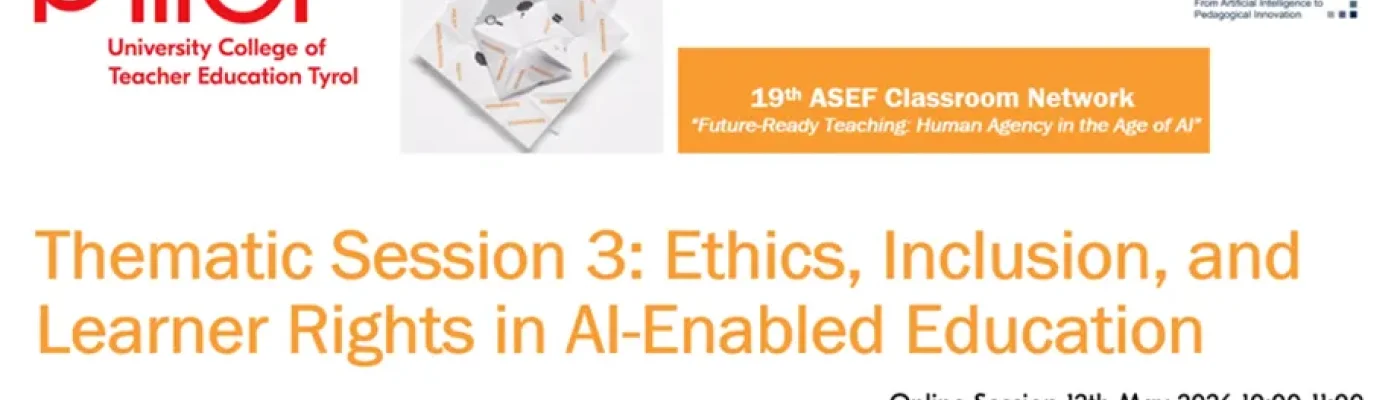
TYROL, May 12, 2026 — Around 100 teachers from Europe and Asia joined the ASEFClassNet19 online session led by researchers from the University College of Teacher Education Tyrol, exploring how AI-enabled education intersects with language diversity, inclusion, and learner rights. Through practical examples and critical discussion, the session highlighted a central challenge for AI in education: ensuring that technological innovation supports participation and equity rather than reinforcing existing linguistic and digital inequalities.